“Why do you guys exist at all? We already provide a free stack with our chip.”
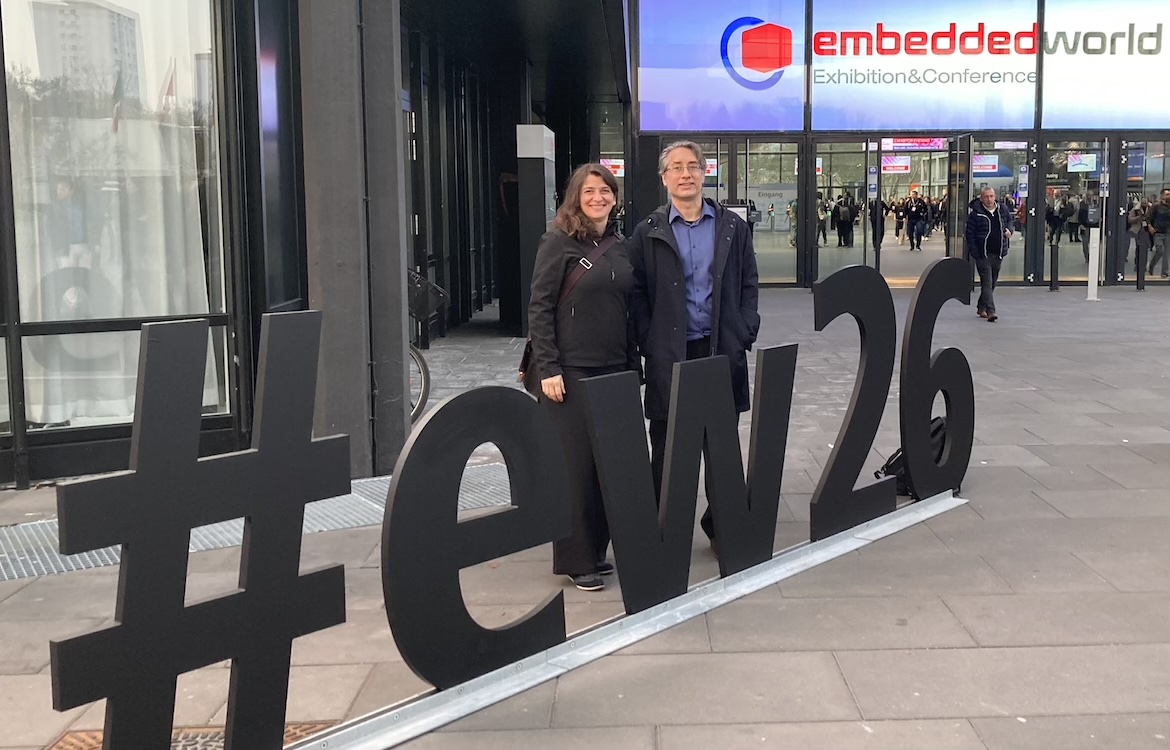
We visited the Embedded World Exhibition in Nuremberg again this year as an independent Bluetooth Host Stack vendor.
Events like this are a great opportunity to step outside of project threads and long technical email exchanges and actually meet the people behind them. It adds a much-needed personal dimension to the work we usually do remotely.
It’s also a place where you quickly find others on the same wavelength — engineers dealing with the same practical realities of hardware and Bluetooth chip restrictions. As always, we had many discussions about solutions and possibilities. And yes, we’ll keep advocating for a few things we believe would make many developers’ lives easier — such as a very simple GPIO-toggle-based time synchronization mechanism for LE Audio TWS, as well as better support for forwarding Bluetooth Classic audio to LE Audio.
One moment from the show kept resonating. A silicon vendor product manager, genuinely surprised, asked us:
“Why do you guys exist at all? We already provide a free stack with our chip.”
Anyone who has ever had to migrate hardware mid-product lifecycle will probably smile at that one. Interestingly, at least half of our customers actually use that vendor’s chips. So let’s start with the elephant in the room: What we enable is continuity and flexibility. Customers can keep and evolve their existing applications while moving to new hardware (both MCUs as well as Bluetooth Controllers) when needs change — whether for technical reasons (chip discontinuation, limitations, failures) or political realities such as location-based vendor restrictions.
Two other aspects we consider equally important:
- Flexibility to build demanding applications without being locked into a single silicon ecosystem.
- Responsive, direct support instead of navigating multiple layers of vendor support channels.
There is also a practical engineering benefit: being able to run the same application across different hardware platforms, including a desktop systems, without rewriting it allows for fast problem bisection. Testing against multiple chipsets can quickly indicate whether an issue originates in the application layer, the Bluetooth stack, or the link layer in the Bluetooth Controller.
All in all, Embedded World remains a great place for conversations like these.
Looking forward to the next one.